Detroit Casinos Log $112.3 Million Aggregate Revenue in March 2026 Amid Year-Over-Year Dip and Monthly Rebound
Written by Avery Schwarz · Apr 11, 2026

Detroit Casinos Log $112.3 Million Aggregate Revenue in March 2026 Amid Year-Over-Year Dip and Monthly Rebound
Official Figures from Michigan Gaming Control Board Paint the Picture
The Michigan Gaming Control Board released its monthly casino revenue report on April 9, 2026, detailing how Detroit's three commercial casinos—MGM Grand Detroit, MotorCity Casino, and Hollywood Casino at Greektown—collectively generated $112.3 million in aggregate revenue for March; this figure encompasses table games, slots, and retail sports betting, showing a snapshot of the industry's pulse in the Motor City as spring kicked off with mixed signals.
Observers note that such reports, released promptly each month, offer a clear window into operational performance; data like this helps stakeholders track trends, especially since March 2026's numbers reflect a 4.5% decline from the prior year while marking an 11.5% jump from February's totals.
But here's the thing: while the overall aggregate dipped slightly year-over-year, certain segments told a different story, with sports betting posting sharp gains that caught attention amid ongoing industry shifts.
Core Gaming Revenue Drives the Bulk at $111.5 Million
Table games and slots, the longstanding backbone of casino operations, pulled in $111.5 million during March 2026; this amount, representing the lion's share of the total, underscores how traditional gaming remains dominant even as newer verticals emerge.
Figures reveal a nuanced performance: down 4.5% from March 2025's levels, yet up a healthy 11.5% from February 2026, suggesting seasonal rebounds or promotional pushes took hold after winter's slower pace; experts who've tracked these patterns over years point out that March often serves as a bridge month, where foot traffic picks up but doesn't always match peak holiday surges.
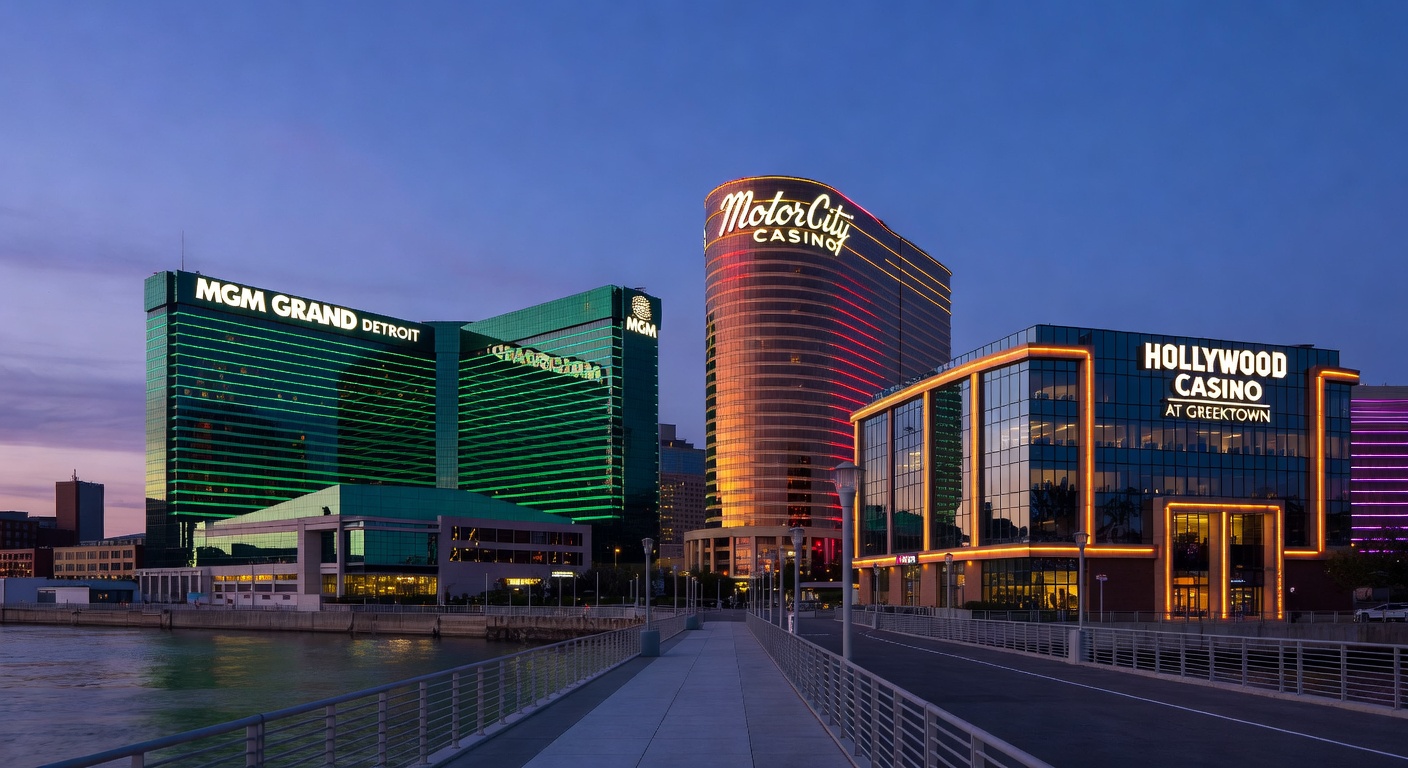
Take MGM Grand Detroit, for instance: its $51.9 million haul positioned it as the market leader, capturing 47% share; MotorCity Casino followed with $34.9 million and 31%, while Hollywood Casino at Greektown rounded out the trio at $24.7 million, holding 22%—a distribution that has held relatively steady, although subtle shifts occur month to month based on events, marketing, or economic factors in the region.
Sports Betting Delivers a 41.9% Year-Over-Year Surge
Retail sports betting added $810,424 in qualified adjusted gross receipts for March 2026, a standout performer with growth of 41.9% compared to March 2025; this uptick highlights how legalized sports wagering, now firmly entrenched since Michigan's expansions, continues to expand its footprint within casino ecosystems.
What's interesting is the contrast: while core gaming faced headwinds, sports betting's momentum—fueled perhaps by March Madness basketball tournaments or early MLB action—provided a counterbalance, contributing modestly to the total but signaling robust demand; data from the board indicates such receipts reflect wagers minus payouts and taxes, offering a precise measure of profitability in this high-velocity segment.
And yet, people who've studied these reports observe that sports betting's growth trajectory, even as it climbs, still trails the sheer volume of slots and tables; that said, its percentage gains draw eyes because they point to evolving player preferences, where bettors blend digital apps with on-site experiences at venues like these Detroit powerhouses.
Market Shares Hold Firm with MGM Leading the Pack
MGM Grand Detroit commanded 47% of the market at $51.9 million, leveraging its central location and expansive offerings; MotorCity Casino secured 31% with $34.9 million, known for its loyal local following and entertainment lineup, while Hollywood Casino at Greektown took 22% via $24.7 million, benefiting from its Greektown district charm that draws crowds for dining and nightlife alongside gaming.
These shares, consistent with historical patterns, reflect each property's competitive positioning; for example, MGM's edge often ties to its hotel-resort integration, pulling in visitors beyond day-trippers, whereas MotorCity emphasizes high-limit rooms and celebrity chef spots—factors that, according to board data, influence revenue splits without dramatic overhauls month to month.
- MGM Grand Detroit: 47% ($51.9 million)
- MotorCity Casino: 31% ($34.9 million)
- Hollywood Casino at Greektown: 22% ($24.7 million)
Such breakdowns, released transparently, allow analysts to gauge not just totals but competitive dynamics; turns out, in March 2026, no major disruptions altered the pecking order, although MotorCity's slice edged slightly higher than some prior months.
Comparisons Reveal Broader Trends: YoY, MoM, and YTD
Year-over-year, the $111.5 million from table games and slots marked a 4.5% drop from March 2025, a figure that prompts questions about economic pressures or shifting entertainment options in southeast Michigan; yet the 11.5% month-over-month increase from February 2026 showed recovery momentum, possibly as warmer weather lured more patrons indoors to the slots' glow or tables' buzz.
Year-to-date through March, casino gaming revenue sits 0.8% below 2025's pace, a slim margin that keeps the industry on watch; researchers examining these sequences note how external variables—like fuel prices, regional employment, or competing attractions such as sports events—can nudge aggregates up or down without signaling deeper woes.
Now, as April 2026 unfolds with preliminary indicators suggesting steady play amid tax season and auto show buzz, March's data serves as a benchmark; the board's timely release ensures stakeholders stay informed, especially since aggregate revenue's composition—99% from gaming, 1% from sports—highlights where the real volume resides.
Understanding Aggregate Revenue and Regulatory Context
Aggregate revenue, or AGR, captures net win after payouts, taxes, and adjustments, providing a standardized metric across Michigan's gaming landscape; for Detroit's trio, this March 2026 total of $112.3 million flowed through licensed operations under strict oversight, with the Michigan Gaming Control Board enforcing compliance on everything from machine counts to bet limits.
Those who've followed the board's evolution since the casinos opened in the early 2000s know its role extends beyond reporting: audits, licensing, and player protections form the framework, ensuring figures like these reflect legitimate activity; in March, for instance, sports betting's qualified receipts—$810,424 after deductions—demonstrate how regulations carve out precise profitability slices.
It's noteworthy that these venues, situated in Detroit's core, contribute significantly to city coffers via wagering taxes; data ties such revenues to municipal funds, although specifics vary by category—slots at one rate, tables at another—creating a ripple effect felt in local budgets as April reports loom.
Spotlights on Each Casino's Contribution
MGM Grand Detroit's $51.9 million led the way, buoyed by its 3,500-plus slots and 100 table games that draw crowds year-round; MotorCity, with its 2,900 slots and poker room, hit $34.9 million by catering to high-rollers and locals alike, while Hollywood at Greektown's $24.7 million stemmed from 2,600 slots, robust tables, and its ethnic enclave appeal that blends gaming with cultural vibes.
Cases like these illustrate how property-specific strategies shape outcomes: MGM invests in shows and conventions, MotorCity in VIP perks, Greektown in themed events—elements that, per board stats, correlate with revenue stability even amid the 4.5% YoY dip.
So, while totals fluctuated, individual performances held ground; experts observe that such granularity in reports helps operators fine-tune, whether tweaking slot denominations or sports bet promotions ahead of busier months.
Conclusion: March 2026 Sets Stage for Spring Momentum
Detroit's casinos wrapped March 2026 with $112.3 million in aggregate revenue, where table games and slots delivered $111.5 million despite a 4.5% year-over-year decline but an 11.5% monthly gain, and sports betting chipped in $810,424 amid 41.9% growth; market shares—MGM at 47%, MotorCity at 31%, Hollywood at 22%—mirrored established hierarchies, while year-to-date figures trailed 2025 by 0.8%.
As the Michigan Gaming Control Board's report underscores, these numbers capture an industry navigating ebbs and flows with resilience; with April 2026 underway and events like the Detroit Auto Show wrapping up, the data positions observers to watch how rebound trends evolve, keeping the Motor City's gaming scene in steady spotlight.