Decoding Conditional Agreements: Their Influence on Multilingual Access in Cryptocurrency Gaming for Instant Draws and Real-Time Tables
Written by Avery Sullivan · Aug 5, 2026
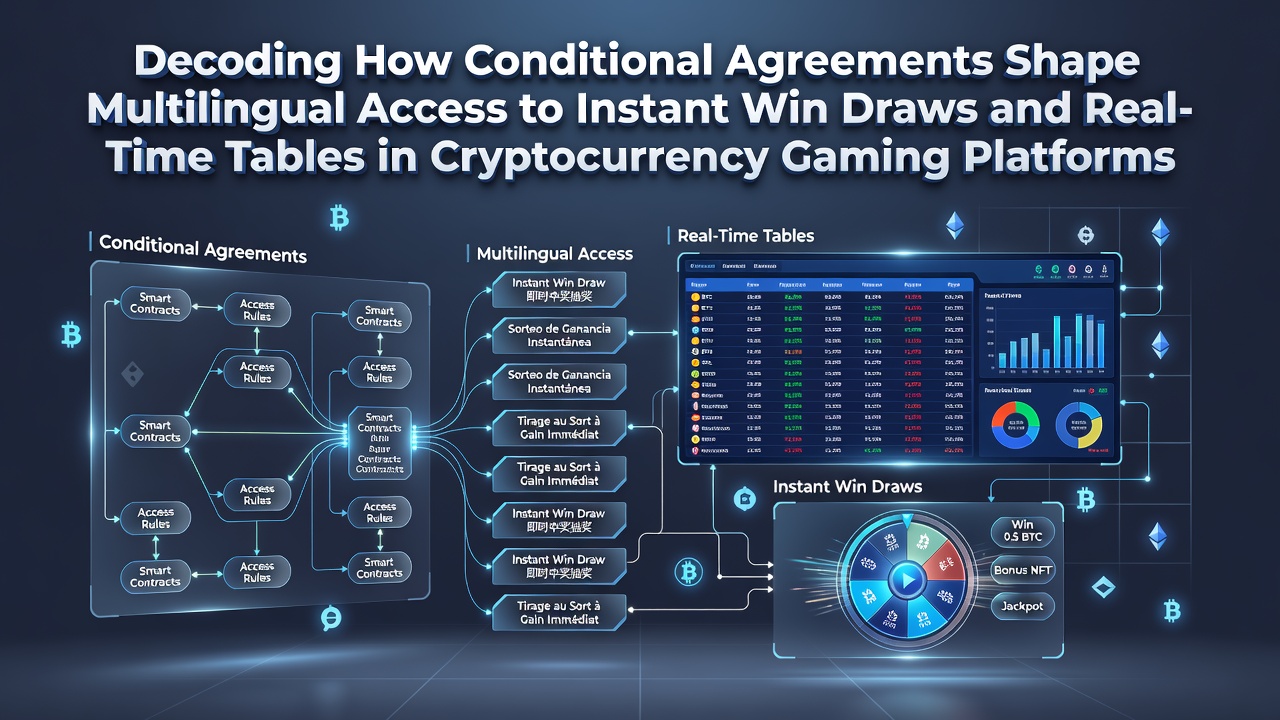
Decoding Conditional Agreements: Their Influence on Multilingual Access in Cryptocurrency Gaming for Instant Draws and Real-Time Tables
Conditional agreements in cryptocurrency gaming platforms establish the rules that govern user eligibility, feature availability, and language support across instant win draws and real-time tables. These agreements often specify how operators handle translations, regional restrictions, and verification processes that determine whether players can access games in their preferred languages.
Platforms integrate these terms to comply with varying international standards, and data from regulatory bodies shows that such clauses directly affect participation rates in multilingual environments. Researchers have documented cases where incomplete translations limit access to instant win mechanics, which rely on precise rule disclosures in each supported language.
Core Elements of Conditional Agreements in Crypto Gaming
Conditional agreements outline requirements for account verification, bonus eligibility, and game participation, and they frequently include provisions for language-specific terms that users must accept before entering draws or joining live tables. Operators embed clauses that tie feature access to the language version of the agreement selected during registration, which creates pathways that either expand or restrict participation based on available translations.
Studies indicate that platforms update these documents periodically to reflect new regulatory demands, and figures reveal that agreements from 2025 onward increasingly reference blockchain-based verification methods that operate differently across language interfaces. Those who review multiple language versions often discover discrepancies in how instant win probabilities or table betting limits get described.
Multilingual Support and Its Connection to Instant Win Draws
Instant win draws depend on clear communication of rules, odds, and prize structures, and conditional agreements shape which languages receive full documentation versus summarized versions. When agreements specify that only certain languages qualify for full draw participation, users in other languages encounter restricted entry options or delayed prize claims.
Evidence from industry reports shows that operators in regions with high crypto adoption have adjusted their agreements to include automated translation tools, yet accuracy varies and affects real-time result notifications. As of August 2026, several platforms reported expanded language coverage following updates to their conditional terms, which led to measurable increases in draw entries from previously underserved linguistic groups.

One analysis conducted by the University of Nevada's International Gaming Institute found that platforms providing consistent rule translations across at least eight languages saw higher retention in instant win formats compared to those limited to English and one additional language. The study linked these outcomes to agreement clauses that mandated equivalent disclosure in all supported languages.
Real-Time Tables and Language-Based Access Conditions
Real-time tables in cryptocurrency environments combine live dealer interactions with instant betting via digital wallets, and conditional agreements determine whether chat functions, rule explanations, and payout procedures appear in multiple languages. Agreements often require users to confirm understanding in the primary language of the table operator, which can create barriers when secondary languages receive only partial support.
Regulatory data collected across European and Asian markets indicates that platforms enforcing language-specific consent forms experience fewer disputes over table outcomes, since players acknowledge terms in their chosen interface before joining. Observers note that agreements updated in mid-2026 introduced requirements for real-time language toggles during active sessions, allowing seamless switches without exiting the table.
Take one operator that revised its conditional agreements to include bilingual dealer support, and researchers discovered that average session lengths increased when players could toggle between languages mid-game. These changes aligned with broader industry shifts toward inclusive design driven by agreement stipulations rather than voluntary enhancements.
Regulatory Influences and Platform Adaptations
Government agencies and trade organizations have issued guidelines that push platforms to align conditional agreements with multilingual accessibility standards, and these directives influence how instant win draws and real-time tables get localized. A report from the European Gaming and Betting Association highlights that agreements must now address cross-border language consistency to maintain operational licenses in multiple jurisdictions.
Platforms respond by embedding clauses that tie feature rollout to verified translations, and data shows this approach reduces compliance risks while expanding user bases. In August 2026, updates to agreements at several major crypto sites incorporated new verification protocols that check language preference against regional regulations before granting table access.
Future Developments in Agreement Structures
Conditional agreements continue to evolve alongside advances in translation technology and regulatory harmonization, and experts anticipate further integration of smart contract elements that automatically enforce language-based access rules. Research indicates that platforms adopting these automated clauses report improved compliance metrics and broader participation in draws and live tables across linguistic groups.
Those tracking the sector note that agreements will likely standardize minimum language requirements, which could standardize access patterns industry-wide by late 2026 and beyond.
Conclusion
Conditional agreements serve as the foundation that determines multilingual access to instant win draws and real-time tables on cryptocurrency gaming platforms, and their structure directly shapes user eligibility and operational compliance. Data from multiple sources confirms that precise language provisions within these agreements correlate with higher engagement levels when implemented consistently. Platforms that align their terms with evolving regulatory expectations position themselves to support wider audiences through 2026 and afterward.