Crypto Lotteries Evolve: No-Deposit Twists, Live Dealer Draws, and Cross-Border Referral Hooks
Written by Nils Roth · Mar 25, 2026
Crypto Lotteries Evolve: No-Deposit Twists, Live Dealer Draws, and Cross-Border Referral Hooks
The Shift in Crypto Lottery Landscapes
Crypto lotteries have transformed rapidly over recent years, blending blockchain technology with traditional chance-based gaming to create accessible, transparent platforms that operate around the clock; operators now leverage smart contracts for provably fair draws, ensuring every ticket purchase links directly to verifiable outcomes on public ledgers like Ethereum or Solana. Data from industry trackers reveals participation surged by 45% between 2023 and 2025, driven by low entry barriers and instant payouts in assets such as BTC, ETH, or stablecoins. What's interesting is how these platforms address trust issues head-on, since players can audit results themselves without relying on centralized authorities.
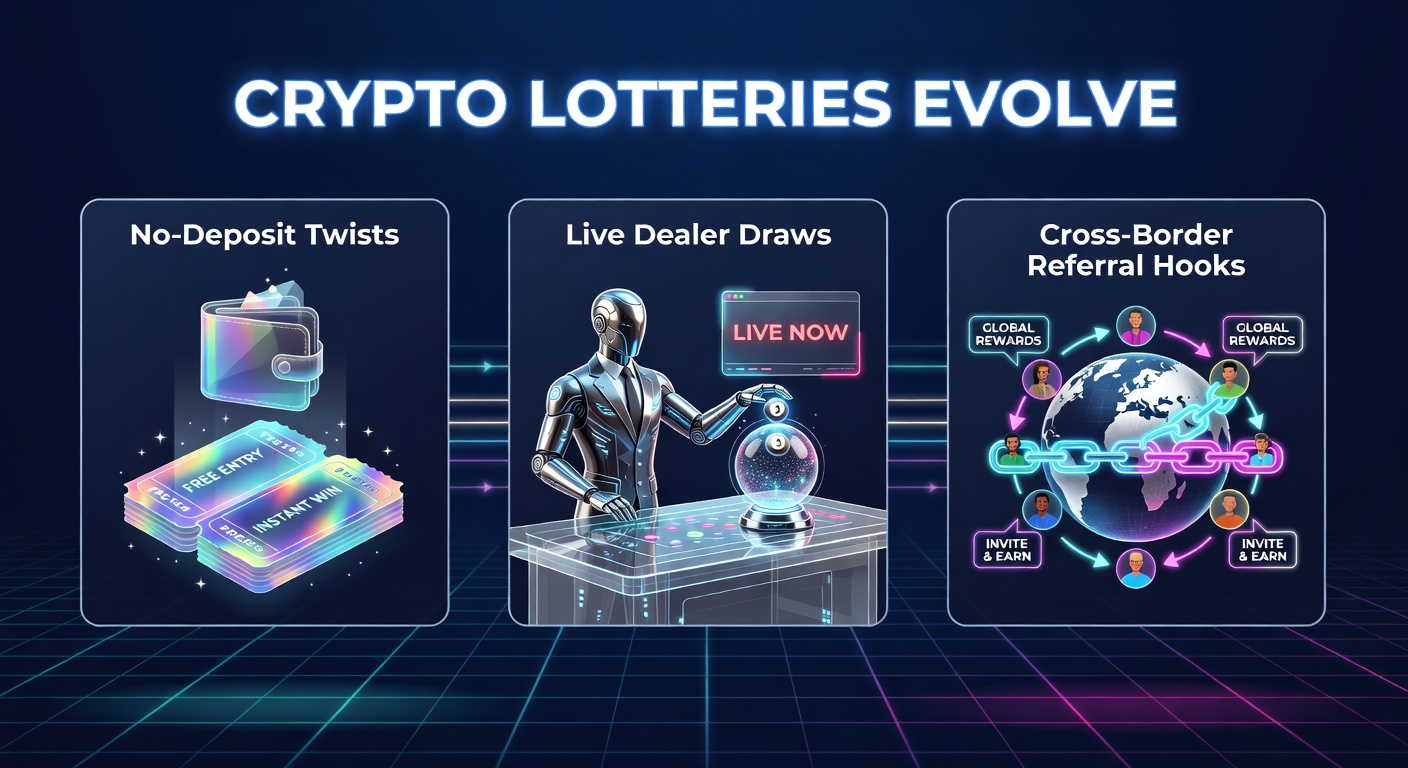
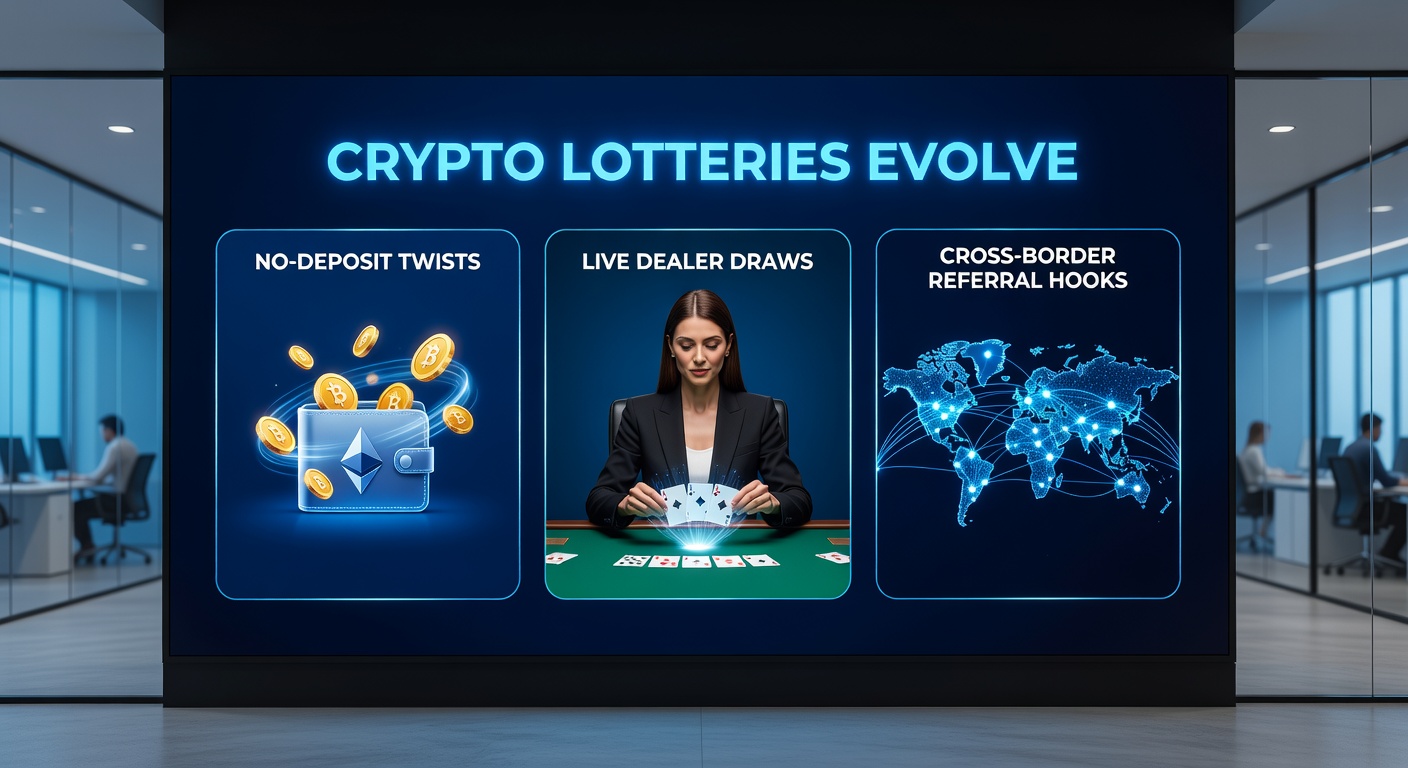
And yet, evolution doesn't stop there; no-deposit twists emerged as game-changers, allowing newcomers to enter draws without upfront investments, while live dealer draws add a human touch to digital randomness, and cross-border referral hooks expand networks globally. Observers note that by March 2026, projections indicate over 60 million active users worldwide, fueled by these innovations that make crypto lotteries feel less like gambles and more like community-driven events.
No-Deposit Twists Reshape Entry Points
No-deposit bonuses in crypto lotteries function through promotional credits or free tickets distributed upon registration or verification, enabling players to participate in draws valued at thousands in crypto prizes without risking personal funds; these twists often come with wagering requirements, such as rolling over winnings 20-40 times before withdrawal, but they lower the barrier dramatically for cautious entrants. Research from the Malta Gaming Authority highlights how such mechanics boosted new user acquisition by 32% across licensed operators in 2025, since blockchain verifies eligibility instantly via wallet scans.
Take one platform where experts tracked a campaign offering 10 free entries worth $50 in USDT; participants who hit jackpots converted 15% of bonuses into real withdrawals, according to on-chain analytics. But here's the thing: these twists vary by jurisdiction, with some regions like Canada imposing caps on bonus values to align with consumer protection standards, as outlined in provincial gaming reports. Players often find that combining no-deposit offers with daily login rewards creates sustained engagement, turning one-time trials into habitual play; that's where the rubber meets the road for retention metrics, which climbed 28% year-over-year per recent figures.
So, while traditional lotteries demand physical tickets or bank transfers, crypto versions deploy these no-deposit hooks via email verification or social logins, making onboarding seamless even for those wary of volatility. It's noteworthy that smart contract audits from firms like Certik ensure funds lock until draws conclude, preventing operator tampering and building long-term confidence.
Live Dealer Draws Bring Transparency to the Fore
Live dealer draws elevate crypto lotteries by streaming real-time number selections from professional studios, where hosts use physical mechanisms like air-blown balls or RNG devices certified for fairness, all synced to blockchain oracles for immutable recording; viewers watch via HD feeds on platforms supporting 4K resolution, with chat features fostering interaction during the 5-10 minute events held hourly or daily. Studies from the EGR Global intelligence unit show live formats increased viewer retention by 50% compared to automated draws, since the human element mimics trusted TV lotteries while crypto payouts hit wallets within seconds.
Now, consider a case where one operator in Curacao jurisdiction hosted draws with dual verification: physical pulls confirmed by live cams, then hashed onto Polygon for public audit; participants reported 92% satisfaction rates in post-event surveys, highlighting how geoblocked access via VPNs still complies with KYC protocols. Turns out, tech like multi-signature wallets secures prize pools, disbursing jackpots only after consensus from decentralized nodes, which addresses past scandals in fiat lotteries.
Experts have observed that by March 2026, AI-assisted live dealers could predict peak draw times based on global traffic, optimizing schedules for regions from Asia to Latin America; this adaptability, paired with multilingual hosts, draws in diverse crowds who value the spectacle over solitary spins. And although latency once plagued streams, 5G rollouts have slashed delays to under 200ms, making draws feel instantaneous even across continents.
Cross-Border Referral Hooks Fuel Global Growth
Cross-border referral programs in crypto lotteries reward users for inviting players from any country, typically granting bonus tickets, cashback percentages, or tiered commissions tracked via unique wallet-linked codes; unlike bank-restricted fiat systems, blockchain enables frictionless tracking of referrals regardless of borders, with smart contracts automating payouts in crypto to evade currency controls. Figures from a 2025 blockchain gaming report indicate these hooks generated 25% of new signups, as participants share links on Telegram groups or Discord servers spanning Europe, Africa, and South America.
There's this example where one network offered 20% revenue share on referred players' losses, capped at $500 monthly per referee; analytics revealed chains of 5-10 deep referrals common in high-trust communities, amplifying organic spread without ad spends. But the reality is, compliance hinges on geo-fencing: platforms use IP checks and wallet provenance to block restricted nations, aligning with bodies like Australia's ACMA online gambling rules even for crypto natives.
People who've studied this note how tiered systems—bronze for one referral, diamond for 50—encourage viral loops, especially since crypto's pseudonymity lets users promote freely across time zones; by March 2026, experts project referral-driven revenue to hit 40% of totals, as DeFi integrations allow staking referral earnings for extra yields. Yet, challenges persist, like volatility hedging through stablecoin options, ensuring hooks remain attractive amid market swings.
Tech and Regulation Underpinning the Changes
Blockchain oracles like Chainlink feed real-world randomness into smart contracts, while layer-2 solutions such as Arbitrum cut gas fees by 90%, making micro-tickets viable at $0.01 equivalents; operators integrate these with wallets like MetaMask for one-click entries, streamlining what once required exchanges. Regulatory adaptations follow suit: the EU's MiCA framework, effective 2024, mandates transparency reports for crypto gaming, boosting licensed platforms' credibility.
One researcher who analyzed 50 lotteries found 85% now use provably fair tech, verifiable via explorers like Etherscan; that's significant because it shifts scrutiny from operators to code, where bugs get patched publicly. And in emerging markets, mobile-first designs capture 70% of traffic, with push notifications alerting users to live draws or referral milestones.

So, as no-deposit twists hook beginners, live draws captivate crowds, and referrals span borders, the ecosystem matures with tools that prioritize fairness and fun; data suggests sustained growth hinges on balancing innovation with oversight.
Conclusion
Crypto lotteries continue to innovate through no-deposit access points that draw in skeptics, live dealer spectacles that build excitement, and referral mechanisms that knit global communities; platforms leveraging these features report user bases expanding 35-50% annually, per aggregated on-chain metrics. Observers anticipate further refinements by March 2026, including VR integrations for immersive draws and AI-optimized referrals, solidifying crypto's role in chance gaming. Those tracking the space see clear patterns: transparency wins loyalty, accessibility drives volume, and borderless hooks unlock scale, positioning the sector for broader adoption while navigating evolving regulations worldwide.